Update
Back to News
RED Complements Government’s Food Security Efforts
Minister of Agriculture, Irrigation and Water Development, Rosa Mbilizi, recently expressed gratitude for the role that the International Fund for Agricultural Development (IFAD) is playing in supporting the government’s Farm Input Subsidy Programme (FISP) to reach more farmers.
The minister made these remarks at Kumitengo Village, under Senior Chief Kalumbu in Lilongwe District, when she toured farmers benefiting from the Response to Emergencies and Disasters (RED) project under the Sustainable Agriculture Production Programme (SAPP II).
“I would like to thank IFAD for supporting us with US$3 million in this programme so that we can reach more farmers.
My expectation as Minister of Agriculture, and that of the President of Malawi, Arthur Peter Mutharika, is that there should be no hunger in Malawi, and that farmers must be motivated to work hard in order to achieve our goal of food security in the country,” she said.
During the visit, the minister toured the Kalumbu FISP market, where she interacted with market officials and farmers to understand their experiences with the farm input redemption process, as well as the challenges they were facing.
She later inspected maize fields belonging to some of the beneficiaries in order to appreciate how the farm inputs under the programme were being utilized.
Mbilizi said she was pleased that, by mid-January 2026, the redemption rate of fertiliser and certified seed under the RED component had reached 85 percent.
“We expect maize prices to continue going down. Around the same time last year, a 50-kilogramme bag of maize was selling at about K110,000, but now the same bag is selling at around K50,000.
By the time we complete FISP in mid-March, we will have more maize in the country, and that should continue to drive maize prices down,” she said.
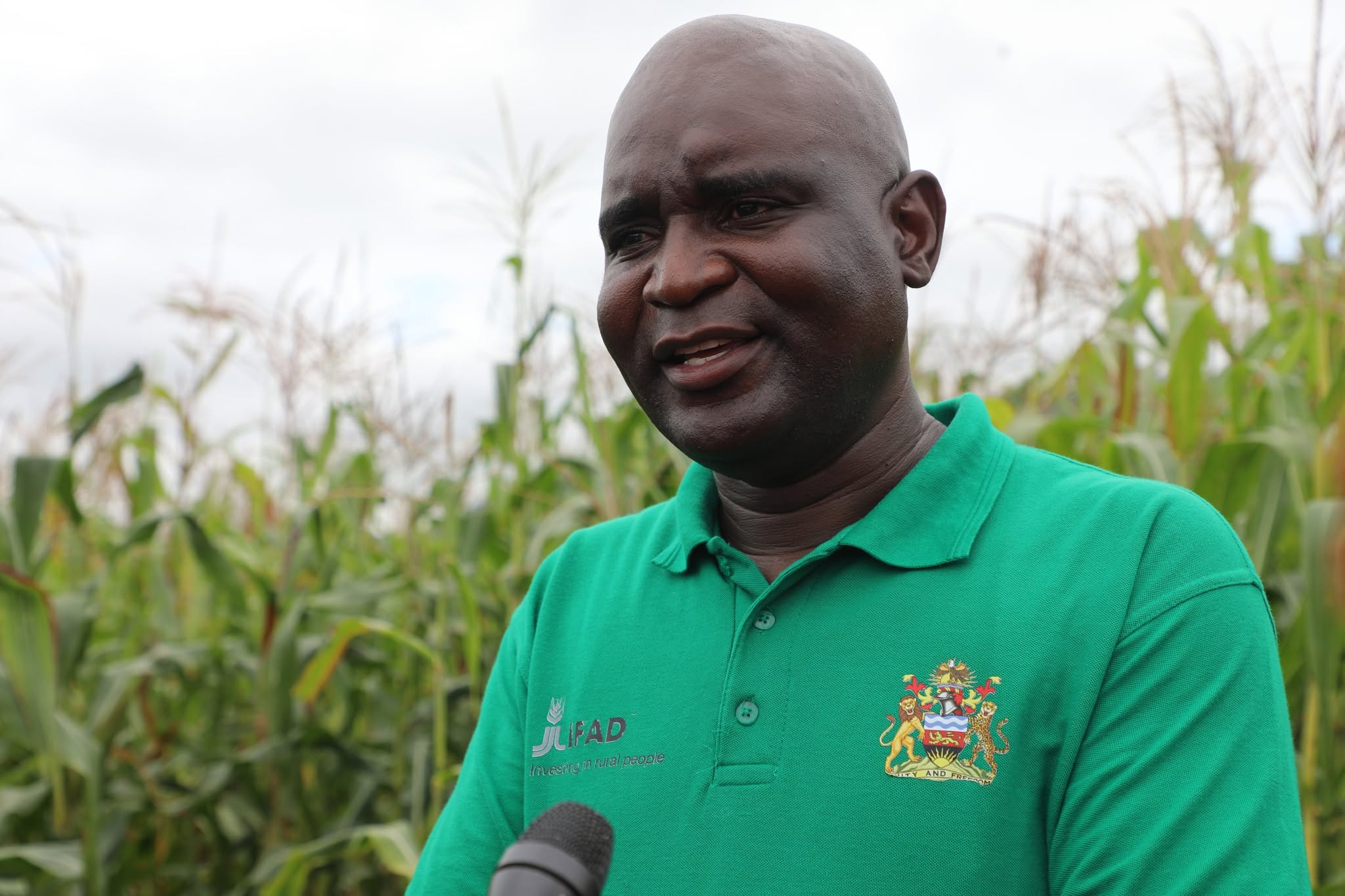
According to SAPP II National Coordinator, Rex Baluwa, the RED component was deliberately incorporated into SAPP II to respond to emergencies and disasters affecting food security.
“When the President declared that there was a food crisis in the country, as a project we approached our financiers, IFAD, and they agreed to the proposal to help the government support farmers so that they could easily access farm inputs for this season,” he said.
According to Baluwa, SAPP II procured 2,200 metric tonnes of NPK and Urea fertilisers, as well as 22,000 five-kilogramme maize seed packs through the RED component.
“Through this programme, we are supporting 22,000 farmers: 17,950 beneficiaries in Lilongwe District and 4,050 beneficiaries in Balaka District. The fertiliser was redeemed at the subsidized price of K10,000 for NPK and K10,000 for Urea, while the 5kg certified maize seed was free for all beneficiaries,” he added.
Baluwa further noted that the RED component has been highly successful in both districts, achieving a redemption rate of 100 percent.
The minister made these remarks at Kumitengo Village, under Senior Chief Kalumbu in Lilongwe District, when she toured farmers benefiting from the Response to Emergencies and Disasters (RED) project under the Sustainable Agriculture Production Programme (SAPP II).
“I would like to thank IFAD for supporting us with US$3 million in this programme so that we can reach more farmers.
My expectation as Minister of Agriculture, and that of the President of Malawi, Arthur Peter Mutharika, is that there should be no hunger in Malawi, and that farmers must be motivated to work hard in order to achieve our goal of food security in the country,” she said.
During the visit, the minister toured the Kalumbu FISP market, where she interacted with market officials and farmers to understand their experiences with the farm input redemption process, as well as the challenges they were facing.
She later inspected maize fields belonging to some of the beneficiaries in order to appreciate how the farm inputs under the programme were being utilized.
Mbilizi said she was pleased that, by mid-January 2026, the redemption rate of fertiliser and certified seed under the RED component had reached 85 percent.
“We expect maize prices to continue going down. Around the same time last year, a 50-kilogramme bag of maize was selling at about K110,000, but now the same bag is selling at around K50,000.
By the time we complete FISP in mid-March, we will have more maize in the country, and that should continue to drive maize prices down,” she said.
According to SAPP II National Coordinator, Rex Baluwa, the RED component was deliberately incorporated into SAPP II to respond to emergencies and disasters affecting food security.
“When the President declared that there was a food crisis in the country, as a project we approached our financiers, IFAD, and they agreed to the proposal to help the government support farmers so that they could easily access farm inputs for this season,” he said.
According to Baluwa, SAPP II procured 2,200 metric tonnes of NPK and Urea fertilisers, as well as 22,000 five-kilogramme maize seed packs through the RED component.
“Through this programme, we are supporting 22,000 farmers: 17,950 beneficiaries in Lilongwe District and 4,050 beneficiaries in Balaka District. The fertiliser was redeemed at the subsidized price of K10,000 for NPK and K10,000 for Urea, while the 5kg certified maize seed was free for all beneficiaries,” he added.
Baluwa further noted that the RED component has been highly successful in both districts, achieving a redemption rate of 100 percent.